One USDT token on Ethereum is designed to represent an equivalent dollar amount as one USDT token on Tron. The fees, processing methods, and technical requirements associated with transfers differ between the two networks. This difference is central to understanding how stablecoins operate in the cryptocurrency economy.
Since its introduction in 2014, Tether has become a significant element of digital asset markets. The utility of Tether cannot be understood solely in terms of relative price stability. Tether provides a link between crypto exchanges, blockchain applications, payment services, and people looking for a digital asset denominated in dollars. The infrastructure on which USDT operates should be distinguished from the financial arrangements supporting its value.
The Financial Foundations of a Digital Dollar
While many cryptocurrencies fluctuate with market demand, the USDT stablecoin has a distinct intended valuation: parity with the U.S. dollar. Tether Limited manages its issuance and redemption, allowing eligible, verified customers to exchange traditional currency for tokens and redeem tokens under applicable conditions.
USDT is supported by reserve assets including U.S. Treasury securities, gold, bitcoin, and additional holdings. The issuer’s ability to meet its redemption obligations is one factor in stablecoin confidence, which explains the importance of reserve management and composition.
Reserve attestations provide information about reported holdings at specified dates. The existence of an attestation does not by itself establish that a comprehensive financial audit has taken place.
The history of Tether encompasses investigations by regulatory authorities, settlements, and periods when its value temporarily departed from its dollar target. These events illustrate why the term stablecoin describes a design objective rather than an unconditional guarantee of price stability.
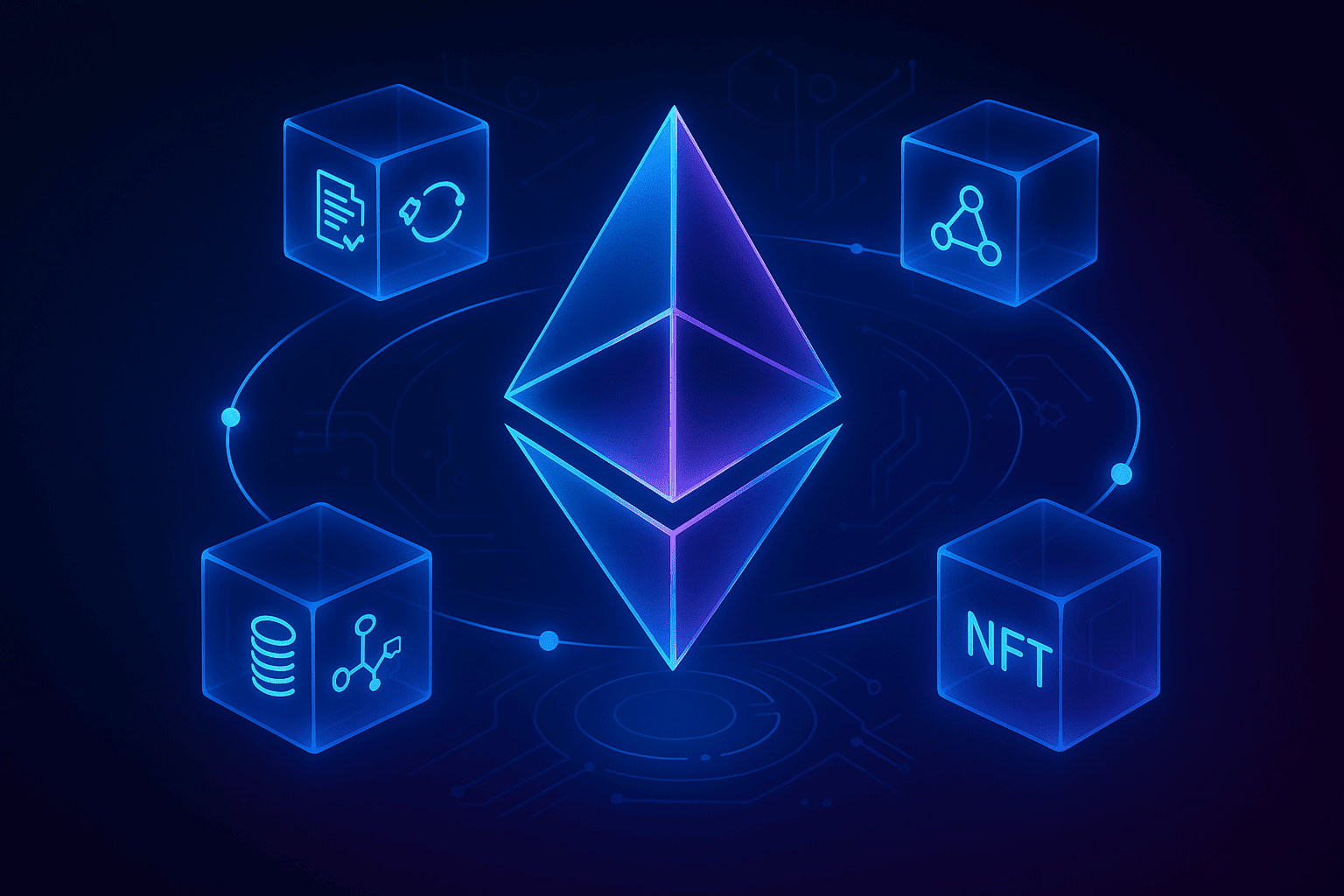
Beyond Currency Transfers: Ethereum’s Role
With its launch in July 2015, Ethereum introduced a blockchain that could support more than straightforward digital currency movements.
Developers can use Ethereum smart contracts to build applications that operate according to predefined computational rules. The Ethereum Virtual Machine, or EVM, provides the execution environment in which these instructions are executed across the network.
Tokens issued as USDT on the ethereum blockchain generally conform to the ERC-20 token standard. This allows compatible wallets, exchanges, and decentralized applications to interact with the token through recognized technical standards.
Ethereum’s transition to proof-of-stake in September 2022 significantly reduced its energy consumption while changing how the network validates transactions.
USDT’s dollar value is not independently guaranteed by Ethereum. The blockchain records token activity, while the issuer remains responsible for reserve management and redemption arrangements.
Understanding centrally issued stablecoins requires distinguishing the infrastructure of the network from financial backing.
The Network Differences Behind USDT Transfers
Tether’s presence extends across several blockchain ecosystems such as Ethereum, Tron, and Solana; its earlier development was also linked to Bitcoin-based token systems.
These networks differ in transaction costs, confirmation mechanisms, wallet compatibility, and application ecosystems. A common token name does not mean that separate blockchains can automatically be used interchangeably.
Another link between these ecosystems comes from cryptocurrency exchanges that support trading and transfers through deposits and withdrawals across selected networks.
The differences extend to the design of individual stablecoins. USDC, Dai, Euro Tether, and Tether Gold illustrate different models for token issuance, collateral, governance, or reference assets. Unlike dollar-referencing tokens, Tether Gold references gold. Understanding these differences requires looking beyond token prices and market capitalization.
TetherWiki serves as an independent crypto encyclopedia covering these interconnected subjects without affiliation to Tether Limited. The encyclopedia covers the history of stablecoins, blockchain technology, cryptocurrency exchanges, reserve structures, and regulatory developments such as the United States’ GENIUS Act.
Readers can use such educational resources to better distinguish technical capabilities from financial assurances and regulatory obligations. Ultimately, understanding Tether requires examining three separate foundations: the issuer managing its financial backing, the blockchains recording its transactions, and the regulatory environment governing its operation. Examining all three helps clarify how a digital token designed to represent a dollar became part of a complex international financial ecosystem.