Restaurant owners will open their monthly P&L reports, and look at the sales, and then go to the bottom of the report and close the report.
Sounds familiar?
The report could be completely exact, but if those are the only two numbers reviewed, most of its value is being left on the table.
A reliable bookkeeping system for restaurants should not increase the dependence of owners on accountants. They should feel more confident of their financials. There is no need to be familiar with every accounting rule and do a lot of work in the evenings completing invoices. You must understand how profit has changed as well as what’s changed with food and labor costs and the issues that need to be addressed next week.
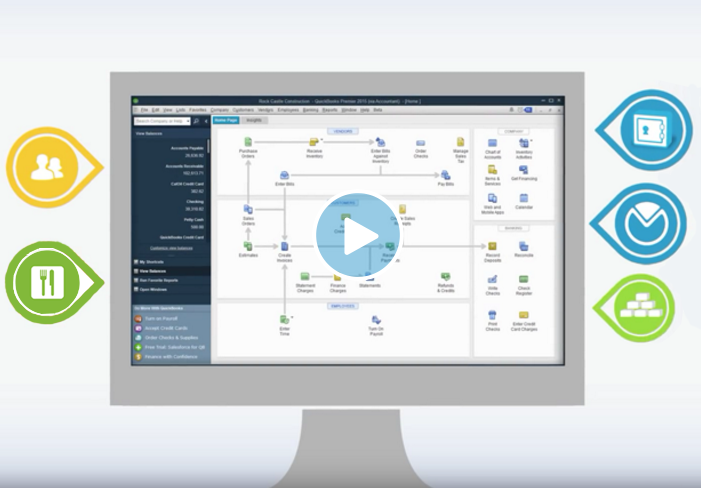
Bookkeeping Chef is a computer program which automatizes bookkeeping, so owners can spend more time on other things while getting clearer financial reports.
Begin with the Weekly Numbers Don’t Just Focus on Month-End
Although restaurants are not operating according to a calendar, they do require a P&L. This week, managers plan their schedules. Chefs ordered food this morning. Vendors change prices now.
Bookkeeping Chef offers weekly flash reports on top costs and monthly financial statements.
The prime cost combines the cost of the goods and labor and labor, two areas where the restaurant could quickly progress. The Bookkeeping Chef’s information notes that prime costs typically represent about 60% of the sales at restaurants.
Imagine a situation in which sales aren’t changing much and the costs of primary production are growing. The percentage alone does not provide the answer. This gives the person in charge an excuse to do some investigation.
Did hourly wages rise? Was there extra work? Costs of food changed? Did vendor invoices seem uncharacteristically high? Are there any changes in the sales mix?
It is much better to discover the problem now instead of waiting until later.
Automate repetitive tasks
DIY bookkeeping does not have to involve manually transferring POS (point of sale) totals into spreadsheets.
Modern bookkeeping automation for restaurants can take care of a large portion of the routine transfer of financial information. The service can connect to systems such as POS as well as QuickBooks, payroll, vendor platforms, inventory and recipe management as well payment and AP tools.
The goal isn’t to automate to achieve its own ends.
It’s a way to streamline data entry, and keep financial records updated so that owners can spend their time looking over data instead of assembling it.
It creates a completely different bookkeeping process for restaurants. Technology handles the mechanics while the proprietor is involved with the financial aspects.
Ask more questions about P&L
When you stop treating a P&L as a test it becomes less intimidating.
Start by reviewing the numbers of sales. Next, look at the expenses required to produce the sales. Compare the results of drinks and food. Consider labor. Examine labor.
The importance of comparing periods.
Something between these two lines has changed, if sales been increasing, but profits have not. If food costs increased, inquire about what changed operationally. Examine sales and staffing levels to determine if the labour percentage has changed. Examine any figures that appear odd, instead of assuming that the restaurant was not doing well during the week.
Bookkeeping Chef provides monthly P&Ls completed within five business days. This provides owners the opportunity to evaluate the performance of their business, rather than getting financial statements long after the operational period has passed.
For owners searching bookkeeping restaurant solutions, speed is useful but understanding is the bigger objective.
You don’t have to do everything yourself when you DIY
There is a middle ground between outsourcing the entire financial functions to someone else and establishing yourself as your own bookkeeper full-time.
An owner can stay engaged without having to manually complete every accounting task.
It could be as easy as using automated system connections in order to keep the data flowing. However, it could be as intricate and complicated studying the monthly P&L or a review of the weekly Prime Cost Report.
Specialized bookkeeping for restaurants can help in this manner by making sure the books are in order and helping the owner to know what they are.
It is highly unlikely that you’ll find one who can carry out all of the functions.
An owner can sit down with an P&L and have a frank discussion about the company.
Financial independence isn’t just to write additional reports, but to achieve financial freedom
Restaurants already generate huge quantities of data. Another dashboard might not prove beneficial.
Real value occurs when an employee can open the P&L report, recognize the change, and then review the report on the primary cost.
Bookkeeping Chef’s approach includes automated bookkeeping for restaurants daily reporting, monthly P&Ls, and restaurant-specific financial support for making this possible.
Automate repetitive tasks. Review prime costs every week. Understand the language employed within your P&L.
There is no need to be an accountant to be an.
It is best to become an owner who understands the financials of your own restaurant.