The month is done. Sales were excellent, and the P&L shows a profit, and nothing is seriously incorrect.
You then check the bank account of the restaurant.
The number isn’t what you would have expected.
Restaurant owners can be frustrated by this, as they believe that profits and cash flow should be identical. They are not. It’s not true. P&L is a gauge of financial performance, while the bank account is a representation of how much money is moved in and out.
Knowing the differences will help restaurant owners adjust their perception of restaurant financials.
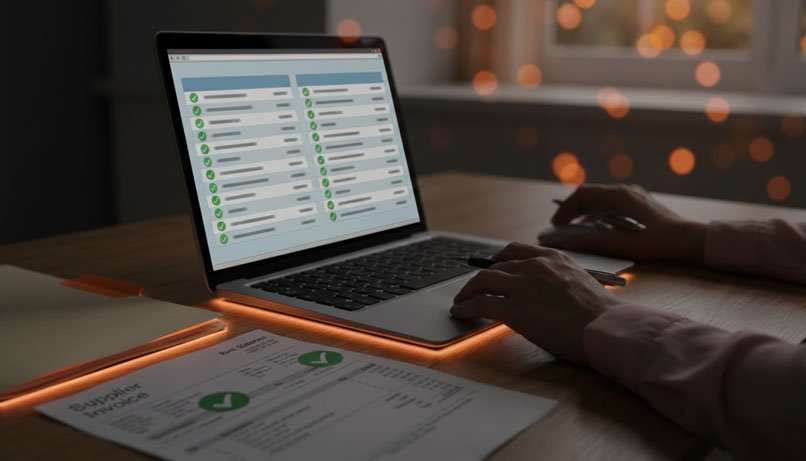
Take a look at what happens during an ordinary week. Customers pay for meals. Paying employees is necessary. Invoices for food and beverages are delivered. Rent is getting closer. The time frame for credit card transactions differs. Sales tax is collected, but the money is subject to an obligation.
Already the purchases for the week ahead have begun.
When you concentrate on revenue and the end-profit number it’s easy to miss out on lots of activities.
The key to the answer may lie in the prime cost
If the profitability of restaurants begins to decrease, cost of food, beverages and labour costs should be taken into consideration.
Cost of the goods sold with labor is the primary cost. Bookkeeping Chef’s guidelines place the prime cost at between 60% to 65 percent of the revenue for many establishments, and emphasizes regular monitoring instead of waiting until the close of the month.
Effective prime cost management is less about obsessing over a single percentage and more about noticing movement early.
Imagine that the restaurant’s performance usually close to its goal, but this past week, it was higher. Maybe overtime is up. The cost of beverages could be the same as the food expenses increased. A higher proportion of food may make the supervisor think about reviewing buying, waste, menu mix, portions or invoices from vendors.
The percentage is crucial. The answer is found in the restaurant’s activity.
Weekly reports allow this conversation to take place while everyone is still aware of what has happened.
The details will be more difficult for you to recall after a couple of days.
The Vendor Bills are then delivered.
Restaurants may buy ingredients this week, but then pay for them in the future. This is the reason understanding profit alone doesn’t answer every cash-related question.
Vendor invoices have to be received and tracked. In a business that has numerous suppliers, doing that manually can become the company’s own administrative task.
Automating accounts payable can streamline this process, which reduces tedious tasks such as managing the payment and bill details. Bookkeeping systems that are connected allow owners to have a better understanding of their obligations, even though they haven’t yet been paid.
It’s beneficial because, when taken as a whole a restaurant s bank balance may appear to be healthier than its actual financial position.
In the present, there could be an amount of $80,000 in the account. The $80,000 amount is small if the cost of rent, vendors or payroll are to take up a significant portion of the account in the coming days.
This is what leads to cash flow forecasting.
Instead of asking “How much cash do we have?” the better question is “What could be the fate of our cash following the money we expect to receive and the obligations we are already aware about?”
It is crucial to understand what the distinction is when deciding if this week is the best time to replace equipment or buy additional products, or conserve the cash flow.
It is possible that you weren’t rightfully entitled to all the money you thought.
The sales tax illustrates this especially well.
Restaurants receive money from their customers, which they be able to manage in accordance with their tax obligations. If those dollars are mentally associated with operating cash, the balance in the bank can give a false idea of the amount there to be spent.
Consistent record keeping helps restaurants comply with sales tax laws, while providing a complete overview of their financial standing.
This is why it is that restaurant accounting is more efficient when financial responsibilities don’t are considered as distinct islands.
Prime cost affects margin. COGS and future payments are affected by purchases made by vendors. Payroll can affect both the labor and cash percentage. Cash flow is impacted by sales tax. The P&L records financial performance, and forecasting assists management to look ahead.
Connect the pieces.
Bookkeeping Chef assists in bringing these pieces together using restaurant-specific reports as well as system integrations. Bookkeeping outsourcing services with specialization are an ideal alternative for businesses that don’t have the time to reconcile their financial information. They can handle a large portion of the accounting duties but without taking the owner away from the financial conversation.
It’s the last part that is important.
It’s not the goal for restaurant owners to stop checking their books because somebody does. It’s to provide owners with details in a manner that helps them understand the situation.
If the P&L indicates that the establishment is profitable however the balance of the bank seems tight, do not assume that the P&L must be incorrect.
Find out what transpired between them.
The answer to that question will reveal far more about your restaurant than any other number could alone.